

By The Materially Better Team
🔊 Listen to this story
2 min. 50 sec.
Reporting season has arrived.
For firms that have committed to the AIA Materials Pledge, 2025 marks an important shift—from aspiration to documentation. While reporting remains optional, leading firms aren’t waiting. They’re submitting data, demonstrating accountability, and shaping what leadership looks like in the built environment.
Here’s the reality: the pledge is clear in principle. The reporting process is clear in structure. The challenge is operational.
That’s where clarity matters.
What Firms Need to Submit
The AIA reporting template requires product-level information drawn directly from project specifications—aligned with the five impact areas: Human Health, Climate Health, Ecosystem Health, Social Health & Equity, Circular Economy.
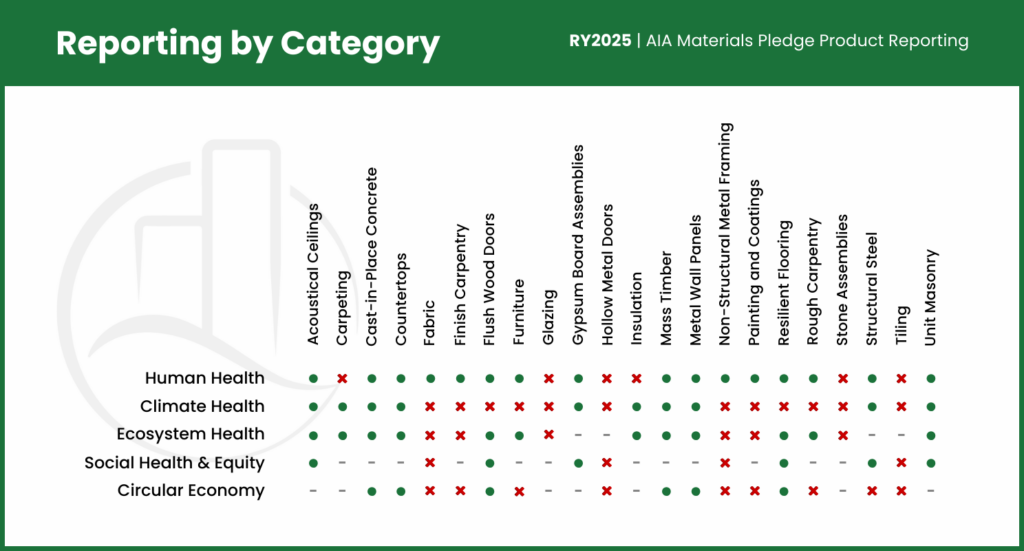
Extracting that data manually from 100% CDs across multiple projects?
That’s a heavy lift. Especially for large portfolios.
Turning specs into submission-ready data is laborious. Delivering it doesn’t have to be. Here’s how we bridge the gap.
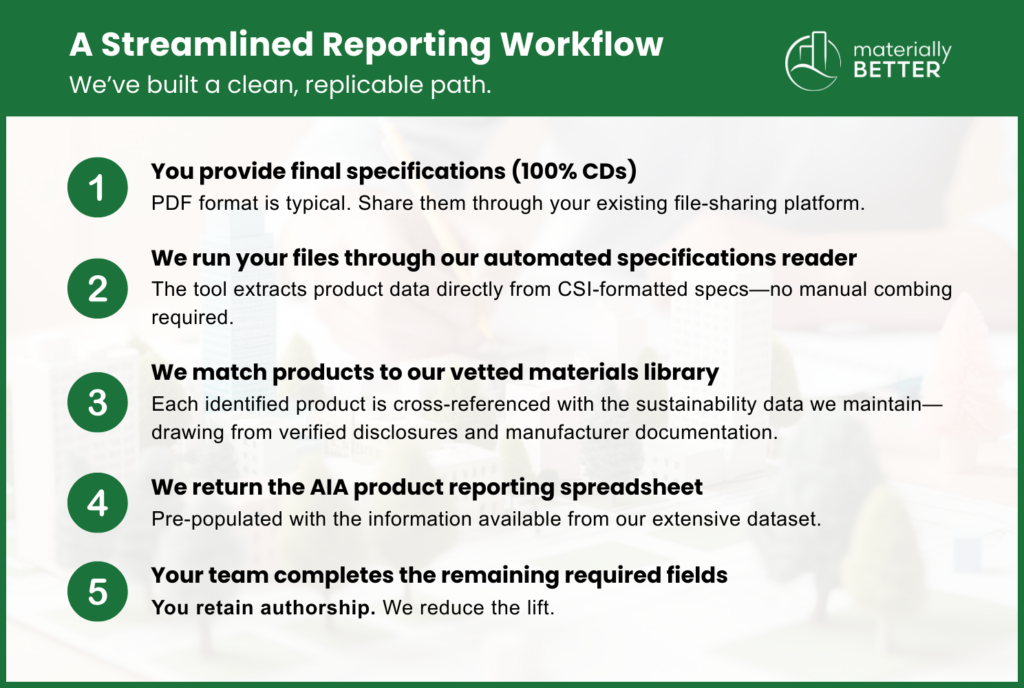
Why This Matters
Large firms reporting early aren’t doing it for optics. They’re doing it to:
- Benchmark portfolio patterns
- Identify specification gaps
- Strengthen internal accountability
- Signal market leadership
Reporting isn’t just paperwork. It’s portfolio intelligence.
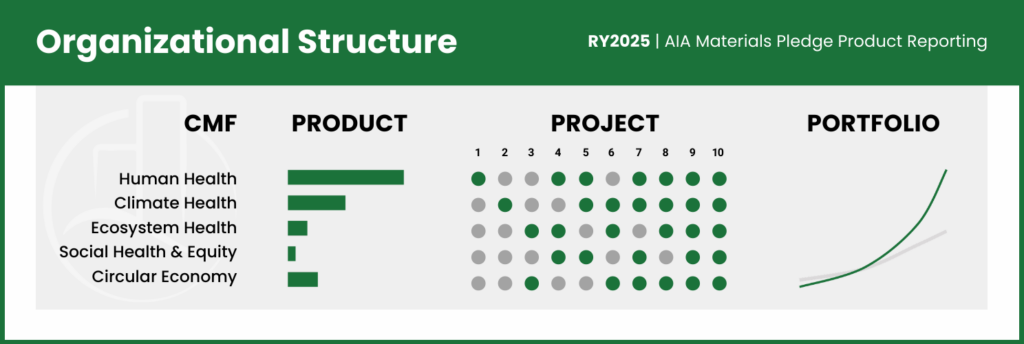
And once the workflow is established, it becomes scalable year over year.
Leadership isn’t just signing the pledge.
It’s showing the work. If your firm is preparing its 2025 AIA Materials Pledge submission, we’ll do the heavy lifting—so you can demonstrate the leadership you’ve already committed to.
Materially Better provides client-focused, context-driven sustainability—turning data into actionable, scalable decisions for all stakeholders.
