

By Matt Root
🔊 Listen to thIS story
3 min. 31 sec.
Introduction
It’s reasonable to assume that the materials shaping our homes and buildings—our flooring, furniture, paints, adhesives—have passed some form of health and safety screening. But in the U.S., the regulatory landscape tells a more complicated story.
What Was Inherited, What’s at Stake
When the Toxic Substances Control Act (TSCA) was enacted in 1976, roughly 62,000 chemicals already on the market were automatically assumed safe—without requiring supporting health data. Since then, the EPA has tested only a small fraction. That’s left us designing spaces on top of a regulatory foundation that was never fully inspected.
Proving Harm Isn’t the Same as Preventing It
Historically, the burden to prove a substance was dangerous fell on the EPA—not on manufacturers. The result? Even with strong evidence, regulation has been slow, limited, and rare. Nearly 50 years in, only a handful of chemicals are even partially restricted under TSCA.
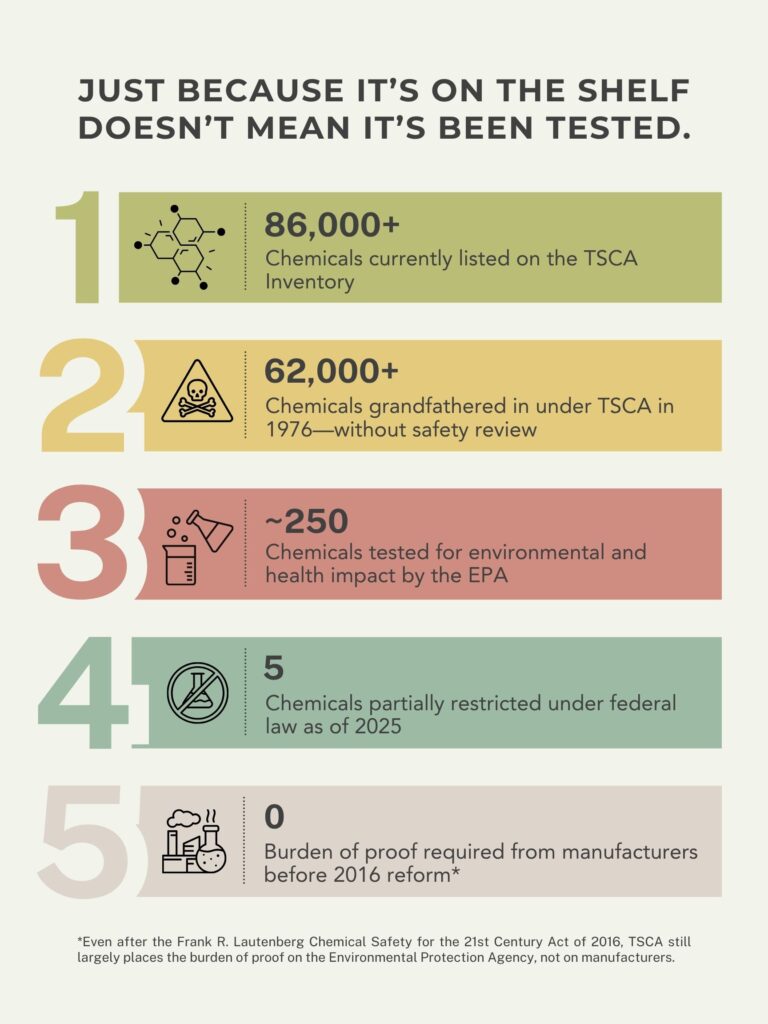
Today’s Products, Yesterday’s Standards
The TSCA Inventory now includes more than 86,000 substances. Even after the 2016 reform intended to modernize safety reviews, most have never undergone thorough testing. That means common building materials—from painted drywall to laminate casework—may contain substances lacking verified safety data.
What This Means for Building Professionals
For those of us in architecture, engineering, and construction, this isn’t just a policy issue—it’s a performance one. Materials matter to human health, social equity, and building durability. When we don’t have access to clear, vetted information, the risk isn’t just theoretical—it’s built into the spaces we create.
Where Red2Green Comes In
This is why we built Red2Green: to close the gap between transparency and action. Our healthier materials library offers verified health and environmental disclosures—empowering teams to move beyond assumptions and build toward replicable, scalable sustainability goals.
Materials Intelligence Starts Now
Many teams are already working hard to make thoughtful, informed decisions—no small task in a growing sea of data and certifications. Clear strategy and expert interpretation matter. Our consulting team empowers clients to cut through complexity, align choices with values, and build a legacy of healthier, high-impact projects. And for teams working toward AIA Materials Pledge reporting, we help translate aspiration into accountable, achievable metrics—rooted in real product data.
Conclusion
The regulatory system may still be catching up, but the built environment doesn’t need to wait. With the right data, tools, and mindset, we can make healthier material choices today—and make those choices standard tomorrow.
Let’s build better—together.
Matt Root partners with owners, stakeholders, and AEC teams to translate building science into measurable performance. He aligns materials, energy, and enclosure strategies to improve durability, indoor air quality, and efficiency—tracking specified products from design through submittals to reveal portfolio-level patterns. He is a member of the NESEA board of directors.
